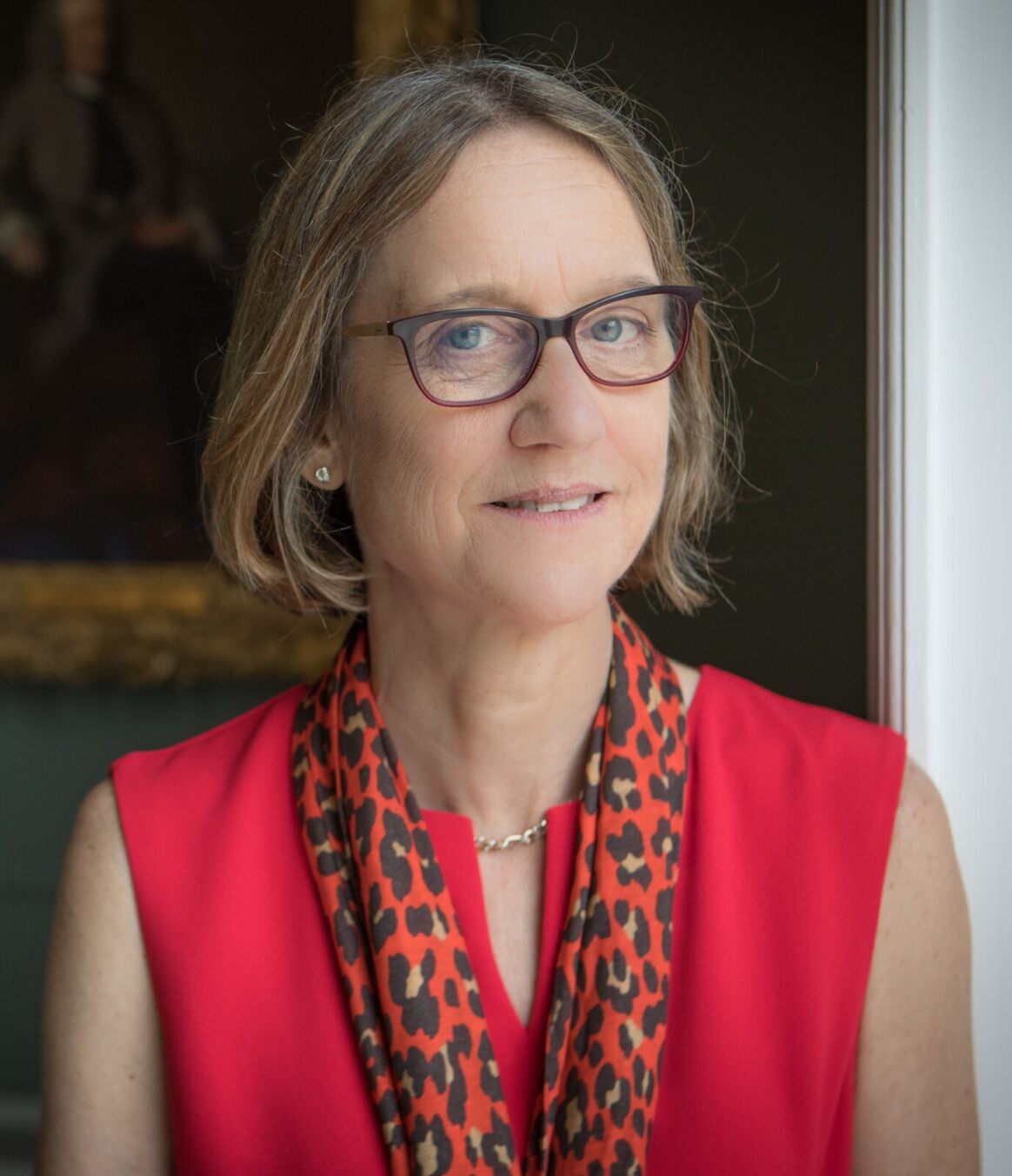
Professor Alison Noble CBE FRS FREng, Technikos Professor of Biomedical Engineering, University of Oxford
Women in AI at Oxford · Profile Series

Alison Noble

Keeping people at the heart of AI in healthcare.

Read

Technologies come and go. The real challenge is knowing when to trust them. It’s a question that has defined the career of Professor Alison Noble, a Turing AI World-Leading Fellow.

What people can do with them

Long before artificial intelligence became a global headline, Alison was using computational methods to tackle some of healthcare’s most complex challenges. Today, she is recognised as one of the world’s leading researchers in AI for healthcare, helping to develop technologies that can analyse medical images, support clinical decision-making and improve patient care.

But while many conversations about AI focus on what machines can do, Alison is more interested in what people can do with them.

“The future isn’t about replacing human expertise. It’s about augmenting it.”

That belief has shaped a career spent at the intersection of engineering, medicine and computer science, and has made her a leading voice on the opportunities and responsibilities that come with AI.

Watch: Professor Alison Noble in conversation

Professor Alison Noble in conversation, filmed at the University of Oxford · Watch on YouTube ↗

From the lab to the clinic

Alison’s career has never been about technology for technology’s sake. Instead, she has focused on applying advances in computing to real-world healthcare challenges.

One of her most significant contributions has been in medical ultrasound, helping pioneer the application of machine learning to imaging technologies used every day in healthcare. Her work has focused on developing methods that support the analysis and interpretation of complex scans, helping clinicians extract meaningful information more efficiently.

Determined to translate research into real-world impact, she co-founded Intelligent Ultrasound, an Oxford University spinout established to bring advances in imaging and AI into clinical and educational settings. The company went on to become an international leader in ultrasound technology before being acquired by GE HealthCare in 2024.

Healthcare problems rarely fit neatly within a single discipline, and Alison has built her career by bringing together experts in engineering, medicine, mathematics and computer science to find solutions. ‘Healthcare is a team sport,’ she has said in public discussions, reflecting a belief that meaningful innovation happens when people with different expertise work together towards a common goal.

Professor Alison Noble CBE FRS FREng

Professor Alison Noble

Asking the difficult questions

While Alison is widely recognised as a leader in artificial intelligence, she is equally known for asking difficult questions about how AI should be used.

As AI systems become increasingly powerful, she has been a prominent voice calling for transparency, trust and responsible innovation. In interviews and policy discussions, she has highlighted the need to understand how AI systems reach their conclusions and the importance of ensuring that researchers, clinicians and patients can trust the technologies they use.

She has warned against becoming over-reliant on opaque AI systems and argues that human expertise must remain central to scientific discovery and healthcare decision-making.

Her influence extends beyond the laboratory. Through her leadership roles, policy contributions and engagement with organisations such as the Royal Society, she has helped shape thinking around the opportunities and challenges that AI presents for science and society.

The women are not necessarily in leadership

Although Alison prefers the focus to remain on the quality of the science rather than the gender of the scientist, she recognises that representation still matters.

Reflecting on the research landscape, she points to a challenge she has observed throughout her career.

“The women are not necessarily in leadership. There are quite a lot at the level below, who are the deputies who are doing all the work.”

Progress is being made, she believes, but ensuring that talented women move into visible leadership positions remains one of the most important challenges facing research and innovation.

For aspiring researchers, her message is ultimately one of possibility. The future of AI will require people who can think across disciplines, challenge assumptions and apply technology thoughtfully to complex human problems.

Alison’s career demonstrates that some of the most important breakthroughs happen when scientific curiosity is combined with purpose, collaboration and a commitment to making a difference.

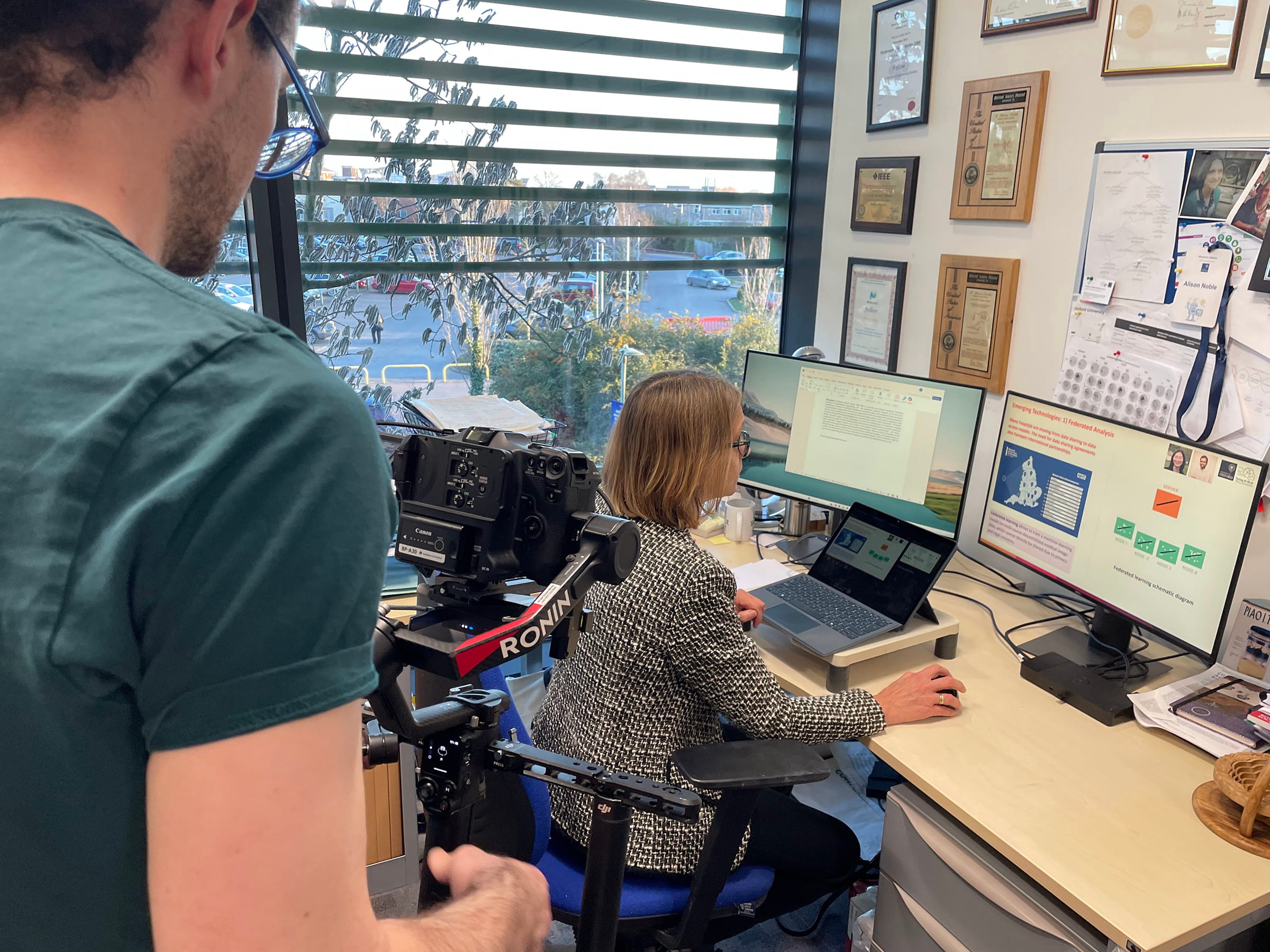
Behind the scenes of filming the Women in AI at Oxford profile series

Behind the camera: filming the Women in AI at Oxford profile series

“The future of AI will require people who can think across disciplines, challenge assumptions and apply technology thoughtfully to complex human problems.” – Professor Alison Noble CBE FRS FREng, Technikos Professor of Biomedical Engineering, University of Oxford