Noa Zilberman, Professor and Head of the Computing Infrastructure Group, Department of Engineering Science, University of Oxford
Women in AI at Oxford · Profile Series

Noa Zilberman

Redesigning the hardware and networks that underpin AI.

Read

When asked whether AI is sustainable, Professor Noa Zilberman’s answer is direct. ‘Currently it’s not.’ She’s working on fixing it.

Science + fiction

Noa Zilberman grew up reading, especially science fiction, and building things. ‘I always loved problem solving.’ she says.

Her first encounter with AI came during an electronic engineering master’s, when she and a colleague analysed downloads from a file-sharing website and used the dataset to predict US Billboard chart success. But AI did not immediately define her work.

Her PhD focused on modelling the evolution of the Internet, while she simultaneously worked in industry on Internet infrastructure and chip design.

After two startups she worked for were acquired by large corporates, she decided she wanted something different. ‘I decided that I had enough. I wanted the freedom to explore what I wanted to explore, not what the company wanted to explore, and to develop solutions that were the best possible and didn’t need to meet corporate constraints.’

At Oxford, she says, that freedom is exactly what she found.

“If you look at the projects that I’ve done over the last five or six years, they’re so wide ranging. At no point has someone come to me and said, ‘No, you shouldn’t be researching this area.’”

Watch: Noa Zilberman in conversation

Noa Zilberman in conversation, filmed at the Department of Engineering Science, University of Oxford · Watch on YouTube ↗

AI is a lot more than algorithms

These days, her research spans three main areas: systems for AI, AI for systems, and the sustainability of AI.

While many people think of AI as software and algorithms, Zilberman looks at the underlying infrastructure: the hardware, networks and architectures that allow those models to run at scale. ‘One misconception is that when people think about AI, they are only thinking about algorithms. AI is a lot more than algorithms.’

AI also involves chip design, system design, governance, policy and sustainability. Not long ago, these topics sat outside what most people considered AI. Now they are directly part of it.

Today, only a handful of companies can run the infrastructure required to frontier AI. This is not only about the cost, she explains, but also the availability of infrastructure. Equitable access to AI depends also on where systems are located and whether people have the skills to use AI tools.

“How can we make AI more accessible to everyone, regardless of their skills and regardless of their income and regardless of where they are?”

Alongside access, sustainability is a central concern in her work. ‘AI systems are so power hungry that we just don’t have enough power to run all the computing we need.’ Is AI sustainable? ‘Currently it’s not,’ she says. ‘I’m working on fixing it.’

One of the major projects she leads is focused on reducing the cost and power of AI systems by three orders of magnitude: making them 1,000 times cheaper to run. The project involves around 25 researchers and academics, developing less power-hungry hardware, building systems that use power more efficiently, considering where and when AI workloads are deployed to reduce energy consumption and carbon emissions, and improving algorithmic efficiency.

She is drawn to ambitious problems. ‘I like big challenges. I like a project that I see can lead to actual impact. I’m not keen on projects where you kind of improve something by 10 per cent. I tend to pick projects where there are questions without a clear answer.’

Do switches dream of machine learning?

Some of the most interesting work in Zilberman’s group begins with questions posed to her undergraduate students. One recent project asked whether the web itself might change in the age of generative AI: could a server send prompts instead of finished content, allowing the user’s device to generate it locally? An undergraduate student implemented the idea and assessed the energy implications, with the work appearing in a paper titled The Small World Web of AI.

Another project asked whether the devices that manage Internet traffic, switches and routers, could run AI algorithms directly. ‘These devices are not using standard CPUs. So that was a really innovative project.’ The work led to multiple research papers, the first titled Do Switches Dream of Machine Learning?

‘A lot of the more interesting projects were actually started from undergraduate students’ projects.’

Also watch Governing through the cloud: the role of compute providers in AI regulation
Professor Noa Zilberman: Making AI Sustainable
YouTube
65 homes
By 2027, a single AI server rack (the size of a fridge) could peak at the same electricity demand as 65 homes.
~1 GWh/year
Electricity saved when a single in-network ML device replaces multiple server racks
Up to 28%
Reduction in carbon emissions from Internet traffic by making network devices use power in proportion to demand

Wider governance

Alongside her technical work, she also considers the broader implications of AI.

She contributes to projects around computing security and engages with policy-making organisations in the UK. She is also part of the Oxford Martin AI Governance Initiative, which combines research, policy and analysis to explore the risks of AI, including unintended consequences and how the technology might be misused.

‘It’s not just the algorithm. Hardware and system design can also affect how efficiently and reliably AI operates.’

Trustworthy AI development, she notes, involves many stages, and the infrastructure layer is one that often goes unexamined.

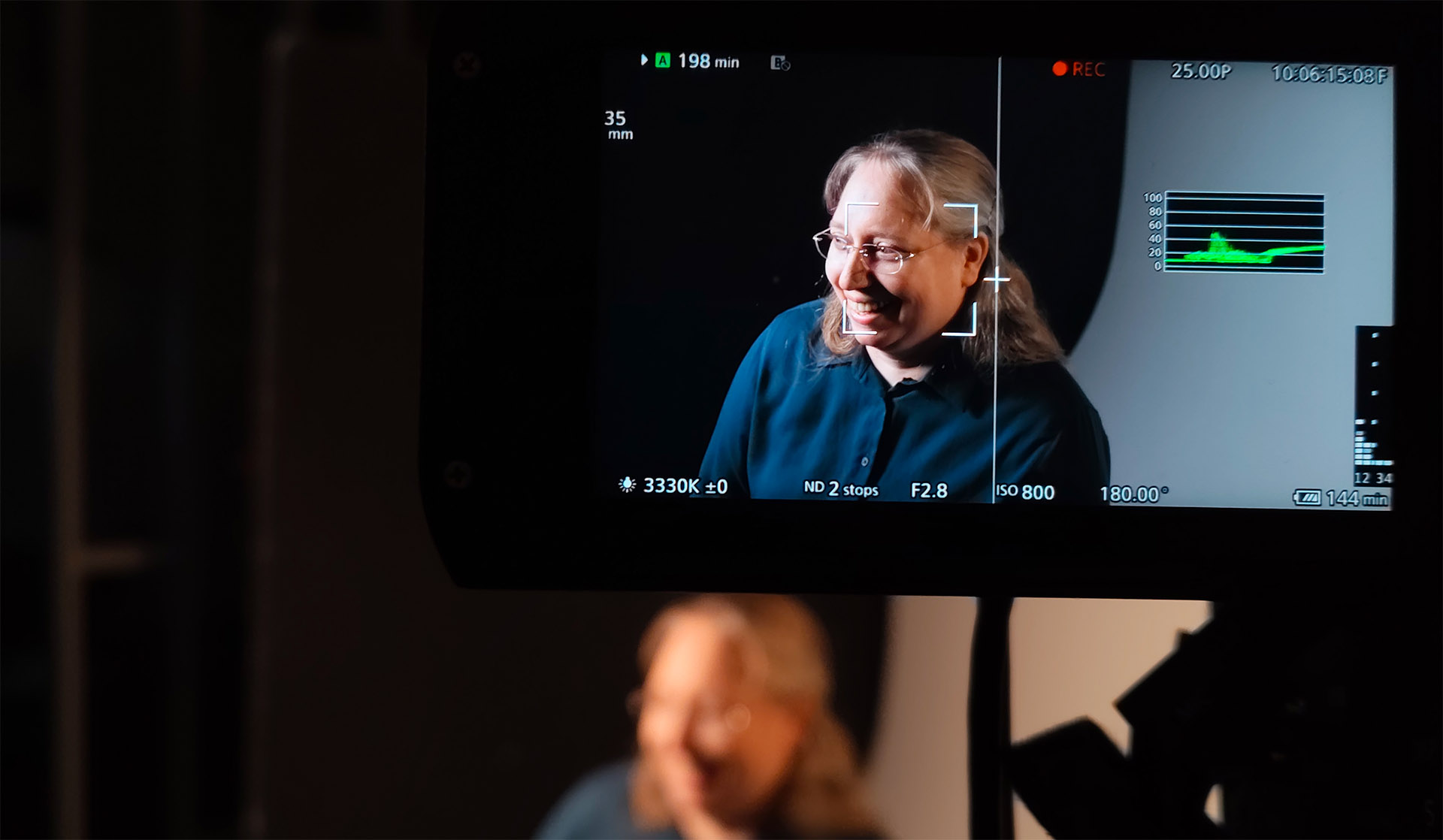
Behind the scenes of filming the Women in AI at Oxford profile series

Behind the camera: filming the Women in AI at Oxford profile series

Curiosity and grit

For students considering a future in the field, Zilberman is direct. ‘AI is probably not what you think. And probably by the time that you graduate, it will become something completely different.’ She encourages students to follow what genuinely interests them. ‘What’s important is to have something that interests you, so that you wake up in the morning and are keen to explore.’

She also challenges common assumptions about engineering. ‘In my daily work, I use very little maths. I’m using binary maths, and I’m not using complex formulas.’ When asked about the most important skills, she points to the wide range her own students bring. ‘I can’t just pinpoint a single thing. Curiosity: a combination of that and grit.’

Looking back, she would not change the path that brought her here. ‘Because that would have meant that I had missed some steps along the way and didn’t learn some skills and didn’t meet some people and didn’t get some opportunities.’

Looking ahead, her research continues to focus on scalability, sustainability, resilience and digital equity – questions about how AI systems can grow and who ultimately gets to benefit from them.

“AI is probably not what you think. And probably by the time that you graduate, it will become something completely different.” — Professor Noa Zilberman, Head of the Computing Infrastructure Group, Department of Engineering Science, University of Oxford