Anticipating what could go wrong
As digital technologies expanded, Marina’s research began to focus on emerging online platforms and their social impact, for example studying how children interacted with online environments. This work led to her appointment as a specialist adviser to the House of Lords Select Committee on children and the internet, where she met Baroness Beeban Kidron, a leading campaigner for children’s rights online. Through that role, Marina began to see how large-scale digital systems could draw in vulnerable users and shape their experiences in ways that increased risk rather than reducing it.
This work helped shape work on responsible innovation, which focuses on anticipating both the benefits and the unintended consequences of new technologies.
‘You are trying to anticipate what could possibly go wrong,’ she says. Today Marina applies this approach to emerging areas including AI, quantum technologies, and responsible robotics.
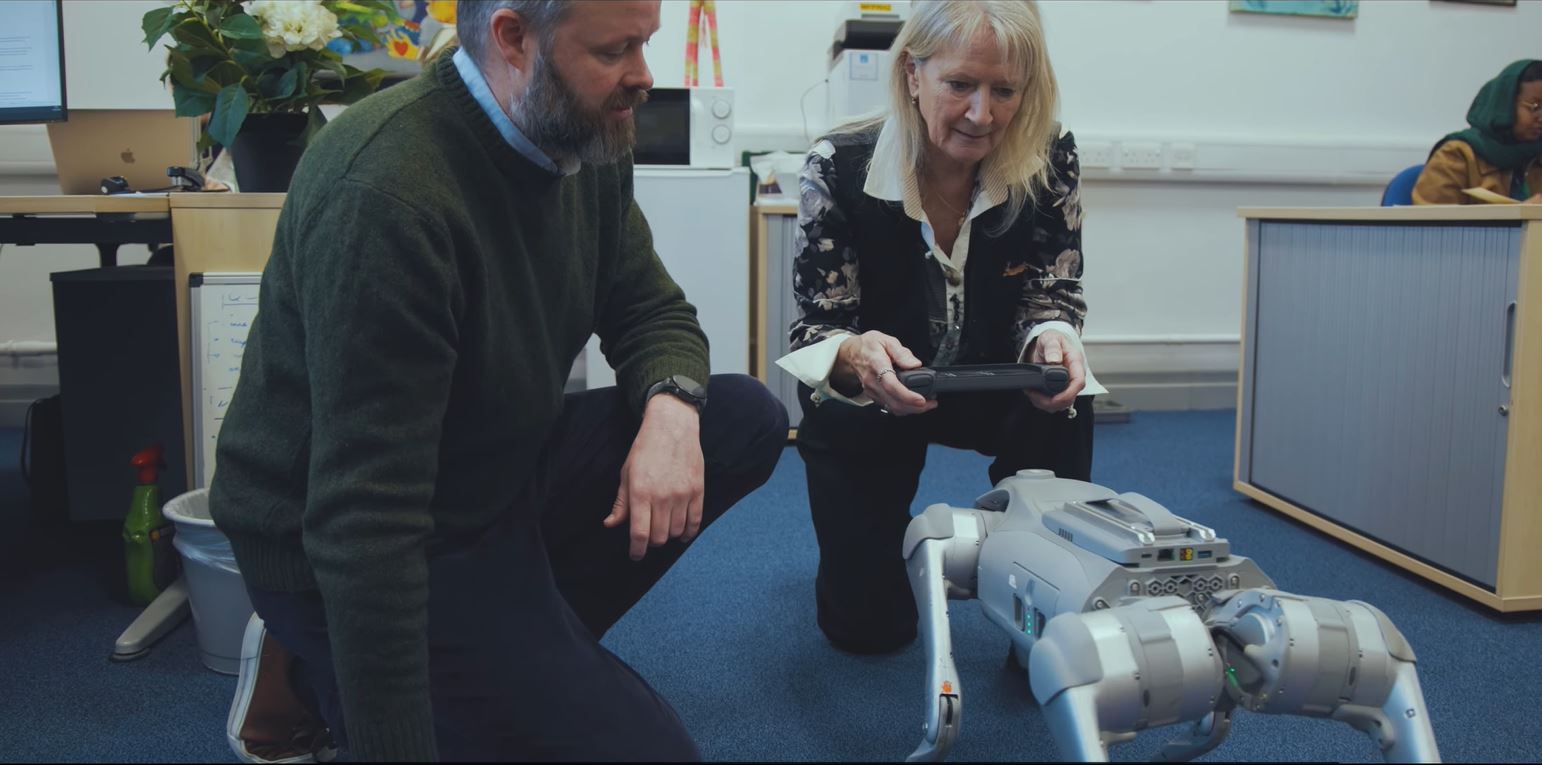
Unlike warehouse robots confined within controlled spaces, social robots interact directly with humans in far less predictable environments. Working with Professor Alan Winfield at the Bristol Robotics Laboratory, the team developed the concept of an ethical black box, similar to the flight recorders used in aircraft. The device records key data about a robot’s behaviour in the moments leading up to an incident.
Importantly, the ethical black box does not determine blame. ‘It’s not the arbiter of truth,’ Marina explains. Instead, it provides evidence for expert human investigators, ensuring that accidents involving autonomous systems can be analysed responsibly.