Ana Namburete, Associate Professor, University of Oxford
Women in AI at Oxford · Profile Series

Ana Namburete

Using AI to rethink how we understand early brain development.

Read

The babies who are most at risk are, too often, the ones least likely to benefit from the AI being built to help them. Professor Ana Namburete has spent her career trying to change that.

Maths was the constant

Ana Namburete was born in Mozambique and spent much of her childhood moving between the United States, Switzerland, and home. The places changed; one thing did not.

‘With all the moving around, I would say what was constant was maths.’ She was drawn to its structure – the idea that you could start from a small set of principles and build something complex, and that problems could lead to clear, concrete answers. At the same time, she was equally interested in biology, though for a very different reason. ‘I liked it more for the questions that it raised, rather than the ones that it answered.’

At that stage, she assumed she would go into medicine. That began to change when she left Mozambique at 16 to study the International Baccalaureate in Eswatini. It was her first time living away from her family.
“What struck me was learning how the machines worked. I had no idea that there was such a rigorous quantitative design behind them.”

The pivot

After finishing the programme, she returned to Mozambique and volunteered in a clinic. It was there that her perspective shifted. The clinic had received new machines, but the manuals were in English and needed to be translated into Portuguese. Ana volunteered and found herself reading not just to translate but to understand.

That moment changed the direction of her career. Instead of becoming a doctor, she began to think about building the tools that clinicians rely on. ‘If I were the one building the tools,’ she says, ‘maybe then it would have more of an impact.’ She moved to Vancouver on a full scholarship to study Engineering Science at Simon Fraser University. The AI came later.

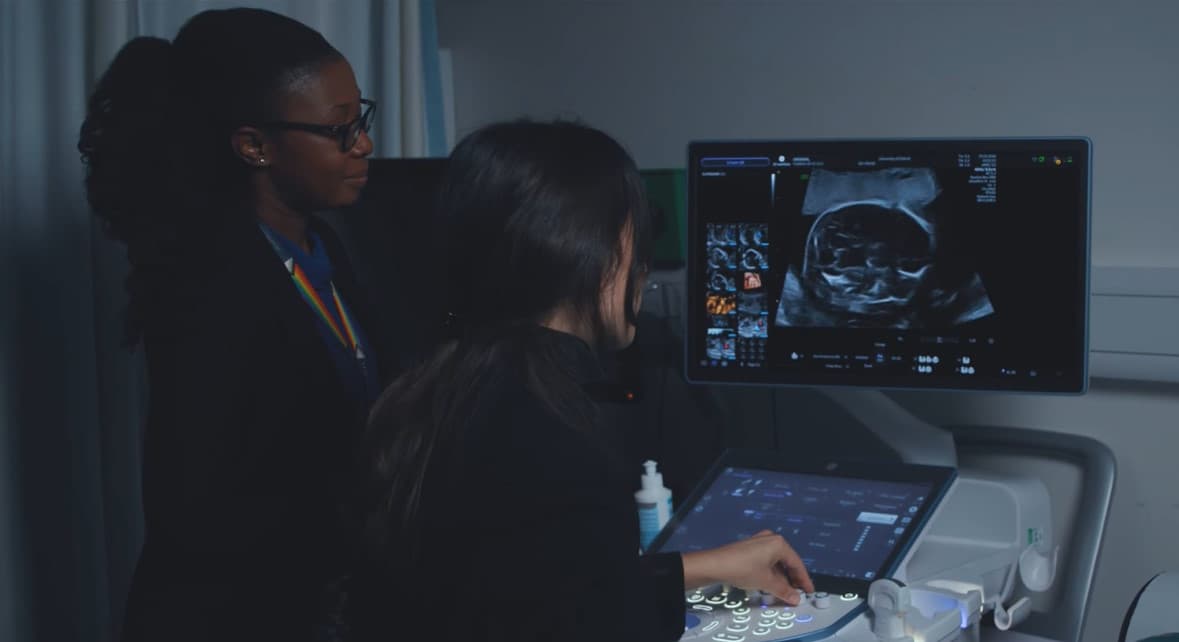
Watch: Ana Namburete in conversation

Ana Namburete in conversation, filmed on location, University of Oxford · Watch on YouTube ↗

Reading the brain before birth

Ana’s entry into AI came during her DPhil, when she joined a lab working on ultrasound imaging of fetuses. Machine learning was just beginning to emerge in medical imaging research, and her approach was driven by a specific problem rather than a broader interest in AI itself.

‘I developed a machine learning model to predict the age of the baby’s brain from standard ultrasound images.’ The model takes a scan and returns an estimate of gestational age, how far along the brain’s development is. In settings where menstrual history is unreliable or unknown, that estimate can be the difference between identifying a baby at risk of preterm complications and missing them entirely.

“It was fundamentally problem-driven. We needed a way to recognise patterns that would give you the age from the scan.”

This approach, starting with a real-world need and finding the technical method to address it, has shaped her work ever since.

From blank page to Lego blocks

When she first began presenting her work, she had to explain what machine learning was before she could discuss her findings. She recalls attending MICCAI, a major medical imaging conference, in 2014, when the field was still relatively small. Within a few years, submissions had roughly doubled and attendance had grown into the thousands.

‘Before, you would open a blank page and write every single line of code,’ she says. ‘Now it’s modular, almost like Lego blocks. You assemble from existing components rather than starting from scratch.’ More recently, AI-assisted coding tools have accelerated the process even further. ‘You can now spend a few days designing a good prompt, and it will generate code that would have taken weeks to write from scratch. And that changes everything about the pace of research.’

That speed brings benefits, but also risks. ‘I think you have to check what it produces and take responsibility for it. That rigour cannot be outsourced,’ she says. ‘If you trust it without interrogating what it has produced, you’re taking a risk. It could do harm.’

Research in progress

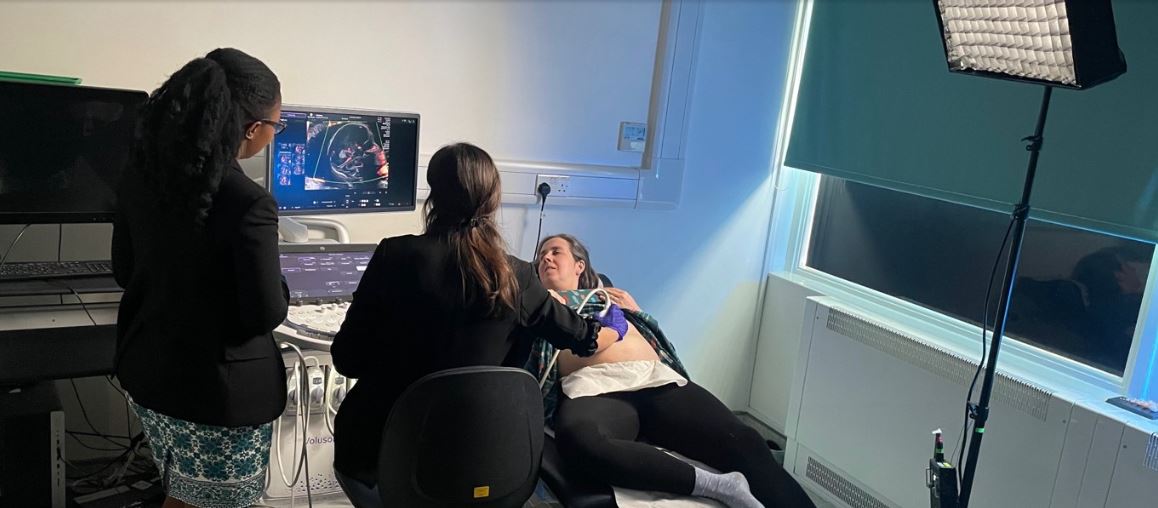
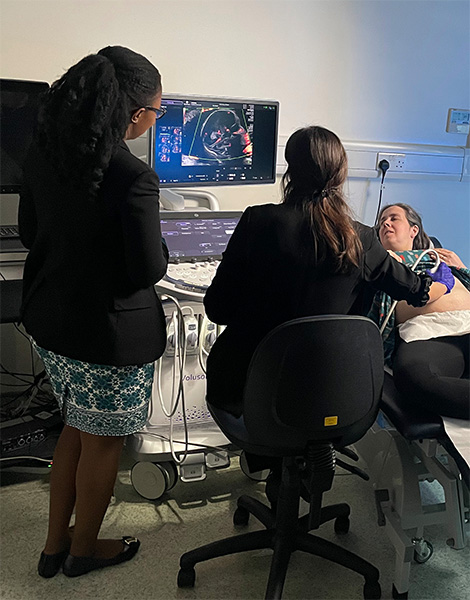
Research in progress at Oxford's John Radcliffe Hospital, Women's Centre

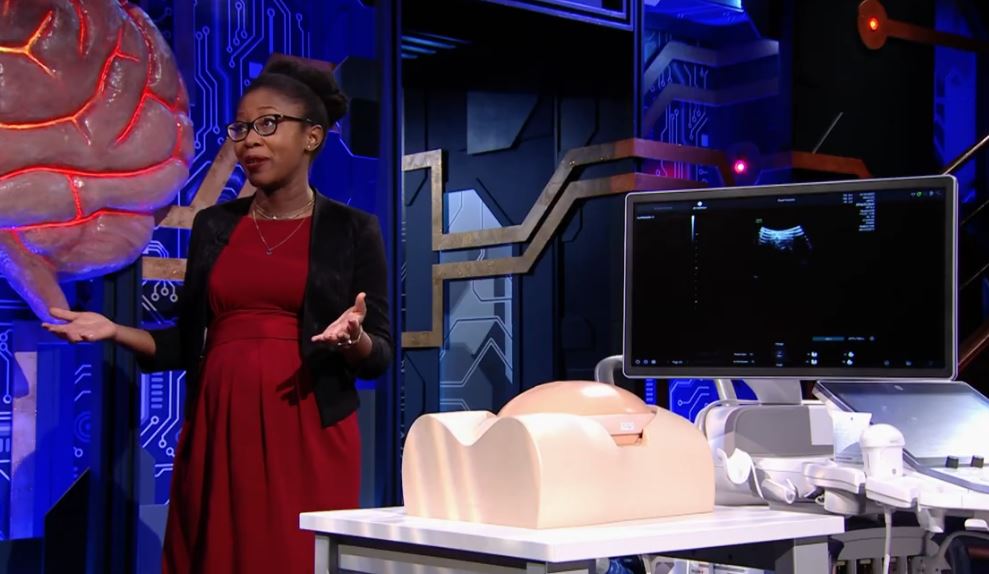
Also watch Ana at the Royal Society Christmas Lectures
Ana Namburete at the Royal Society Christmas Lectures
YouTube · Royal Society
“The babies who are most at risk are the ones least likely to benefit from the AI being developed to help them.” — Ana Namburete, Associate Professor, University of Oxford

Who is this going to work for?

Many AI systems in healthcare are trained on data from North America or Europe, often drawn from relatively homogeneous populations. When those systems are applied elsewhere, they do not always perform well and in her field, that can have serious implications.

In sub-Saharan Africa, for instance, preterm birth rates are among the highest in the world; yet the datasets underpinning most AI tools in prenatal care contain little to no data from that region.

“Growing up in Mozambique, you understand very quickly that solutions have to work within constraints. That never left me.”

Addressing that imbalance is a key focus of her research. She works with international datasets spanning multiple countries, including settings in the Global South. But representation alone is not enough. She also develops methods to ensure that models focus on the right information, distinguishing biological differences from technical noise introduced by different machines and different protocols. ‘We want the model to focus on the biological information,’ she explains, ‘not the technical differences, like which machine was used.’

She is cautious about approaches that aim to overhaul existing systems. Clinical care has been optimised within constraints, including time, cost and what patients can realistically tolerate, and her work aims to enhance what already exists rather than replace it. The choice of ultrasound is deliberate: it is low-cost, portable, and available in settings where other imaging technologies simply are not.

Growing up in Mozambique during a period marked by economic difficulty and the legacy of civil war, she was aware from an early age of the need for accessible solutions.

1 in 10
babies born globally arrive too early, most in low-income settings (WHO, 2023)
~1%
of global health AI training data originates from African countries
10×
cheaper than MRI, making ultrasound viable where other imaging isn’t

Tracking development from womb to world

Professor Namburete is now beginning a new project supported by a European Research Council Starting Grant. The work will focus on tracking brain development from the fetal stage through to early infancy, using ultrasound imaging, aiming to better understand how development unfolds in babies who are born preterm or otherwise vulnerable. ‘We want to see whether there were any indications prenatally of what their trajectory was going to be,’ she explains.

The project also seeks to address a disconnect between different areas of care. ‘Obstetricians and neonatologists don’t often talk to each other,’ she says. By linking data from before and after birth, her work aims to provide a more continuous picture of development, one that does not treat birth as a hard reset in how we monitor the same organ.

‘The tools are always working in service of the problem,’ she says. ‘Keep that relationship the right way around.’

Behind the scenes of filming the Women in AI at Oxford profile series

Behind the camera: filming the Women in AI at Oxford profile series

“Birth shouldn’t be this major disruptive event in how we monitor the same organ.” — Ana Namburete, Associate Professor, University of Oxford